


Contact Us

Contact Us


STUDY OF POPULATION DENSITY AND MORPHOMETRICS BERUNGAN (T. Telescopium) AT MANGROVE AREA ON WATER RUNOFF LEACHATE OF THE DOMESTIC WASTE DUMPSITE AND PROCESSING TELAGA PUNGGUR BATAM CITY – INDONESIA
Yarsi Efendi1, Ramses2
1Lecturer in Biology Education Program, University of Kepulauan Riau, Batam – Indonesia
2Lecturer in Biology Education Program, University of Kepulauan Riau, Batam – Indonesia
Abstract
The Research have done in mangrove area Telaga Punggur N :1 ° 2’39.33, E ;104 ° 7’8.83, had located near from the domestic waste dumpsite and processing (TPA) of Batam City and Sungai Bongkok Tanjung Piayu distric of Batam City, Indonesia, N; 1° 1’48.71, E; 104° 5’4.86 that used as comparison habitat. This research started from September to November 2015, have purpose to compare the population density and the difference of morphometrics of T. telescopium at two different observation sites. The sampling point determined by method of random sampling. The sample has taken by plot measurement 10×10 m and the sub plot measurement 1×1 m placed in 5 pieces plot measurement 10×10 m.The research show that there are differences significant in population density of T. telescopium between the rich nutrition that show on station 1 Telaga Punggur to the low nutrition in the station 2 Sungai Bongkok. Nutrition organic material that contained in the leachate originating from runoff domestic waste dumpsite and processed allegedly giving effect to the high population of T. Telescopium. Differences heavy metal content was significantly correlated with morphometric (length and diameter) of T. Telescopium. This research shows the higher heavy metal content in Telaga Punggur station than into the Sungai Bongkok station, described T. telescopium size or morphometric (diameter and length) are relatively small.
Keywords: Population density; Morphometrics; Telescopium telescopium, leachate, heavy metal
Mangrove ecosystems around in coastal areas of tropical or sub-tropical ecosystems are dynamic and have hight productivity and high economic value. This condition is largely determined by the substrate that is rich in organic matter, thus allowing multiple types of flora and fauna can grow and develop properly. Bengen (2004) state there are a wide variety of organisms that live in the mangrove ecosystem such as fish, mollusks, shrimp, crabs and worms. Mangrove habitat for aquatic biota. Mangrove ecological functions for biota such as the breeding (nursery grounds), areas where foraging (feeding ground) and spawning (spawning ground).
Mangrove systems represent complex and highly dynamic environments in which faunal assemblages typically occupy distinct horizontal or vertical zones, and manifest complex temporal patterns in their activities (Robertson and Alongi, 1992; Hogarth, 2007; Lopes, 2009). The crucial role of marine invertebrates in the food web, nutrient cycling and overall energy ?ux in Indo-Paci?c mangrove ecosystems has become a standard paradigm in ecological research on these tidal forests (Bouillon et al., 2008; Lopes, 2009).
Hutchings and Saenger (1987) in Susetiono (2005) explained that the mollusks especially of gastropod class is the dominant animal groups in the mangrove forest. Mangroves as a habitat where life, shelter, spawning and food supplies can sustain life mollusks.
Rangan, (2015) reported class Gastropod is one of the most members of phyllum Mollusc that are mostly successful to do the environmental adaptation. About 55,000 species inhabit marine habitats distributed from coast to deep sea. Telescopium telescopium is one of gastropods found around the mangrove ecosytem (Kartawinata et al, 1979) and fish pond area near rivermouth with mud substrate of rich organic matters (Radjasa, et al., 2012). Potamididae snails, including T. telescopium, are native residentsi of mangrove forest and live in intertidal and prefer muddy area (Heryanto et., 1989 and Heryanto, 2009). The occurrence of T. telescopium in mangrove forest has sufficiently ecologically and economically important roles. Berungan (T. Telescopium) are often found along the coastal area of Batam, which dominated by mangrove, including Telaga Punggur region. Where in this area was built the domestic waste dumpsite and processing (TPA).
Domestic waste dumpsite and processing at Telaga Punggur is the only one dumpsite in Batam City. In this site all of household waste and urban waste are piled, and processed. System processing of waste has used controlled landfills. Controlled Landfill system has the potential to cause environmental problems, especially the problem of contamination of leachate if not managed properly. It can cause odors, lowering the quality of ground water, sea water, and the emergence of various insects and disease vectors that can damage the health of the surrounding communities.
Leachate can be defined as a fluid infiltrating through piles of garbage and has extracted dissolved or suspended material. Most landfill, leachate is formed of liquid entering the area of landfill waste originating from external sources, such as rainwater, groundwater and liquids produced from waste decomposition. (Tchobanoglous, 1993; Hamidi, 2016). The location of the landfill very close to the sea surrounded by stands of mangrove vegetation. If leachate emanating from the landfill is not treated properly it will potentially pollute the environment, endanger human health, water resources and aquatic biota biota that exist around the landfill. Based on examination of the preliminary studies, this habitat obviously has received runoff from the waste water tank leachate. This leachate runoff physically result in changes to water and substrate in place. These changes include colour that turns into a dark red and spread a pungent odor that is unpleasant.
Based on the above issues then we do the research to assess population density of Berungan (T. telescopium) in the mangrove area that became runoff leachate from waste dumpsite in Telaga Punggur Batam and compare it to the mangrove habitat in Sungai Bongkok which not affected by dumpsite waste leachate runoff.
2. RESEARCH METHODS
The method used in this research is exploration with intra-regional comparisons technique. Where on the two observation station compared their density and individual morphometrics of T. Telescopium.
Time and Place Research
Research was conducted on mangrove habitat around the waste dumpsite Telaga Punggur Batam, Kepulauan Riau Province, Indonesia and Sungai Bongkok Tanjung Piayu Batam Kepulauan Riau Province, Indonesia. Research began in September to November, 2015.

Figure1. Maps of station research.
Data abundance of T. Telescopium is taken by placing randomized 4 plots 10m x 10m on each research station (Telaga Punggur and Sungai Bongkok). Then at the plot 10m x 10m, we made subplot 1m x 1m by using a nylon rope. T. telescopium that collected at the lowest tide. Samples Telescopium telescopiumyang above the substrate and attached to the mangrove roots that are within each sub-plot is taken entirely and put in plastic bags that have been labeled. Furthermore morfometric numbered and measured (length and diameter) for each sample.Then used plot 1m x 1m was made in plot size of 10 x 10 m by using a rope / nylon as many as five sub-plot, which is two sub-plot at the end / corner of each plot and one sub-plot in the center of the plot. Individual census of T. telescopium taken entirely and put in plastic bags that have been labeled. Furthermore we measure morphometric (length and diameter) for each sample.
The density of these T. telescopium was calculated as individual number per square meter by applying the following formula: D = N/A, where: D = density (ind / m²), N = number of individuals and A = area of the observation plot. Welch (1948) in K.K Sharma et al (2013).
Water quality data were analyzed descriptively to obtain an overview of the environmental conditions in the river waters of the mangrove ecosystem in Telaga Punggur station and Sungai Bongkok station. Data were obtained from each location compared to the degree of the Minister of Environment republic Indonesia No. 51. 2004 about Sea Water Quality Standard.
Statistical data analysis using Minitab 14.1 for the test: Mann-Whitney, Correlation Analysis, Regression Analysis, further test to examine alleged median mark a continuously distributed population. Apriadi (2005).
Result and Discussion
Based on research that has been conducted, the average value of physical and chemical environmental factors on 2 observation station, can be seen in Table 1 below.
Table. 1. Water Quality Measurement Results in 2 Observation Station
| No | Parameter | Station 2: Sei. Bongkok | Station1: TPA Punggur | Standard Criteria **) | |
| 1 | Temperature (oC) | 34.6 | 32.4 | 28- 32 | |
| 2 | pH | 7.81 | 7.58 | 7- 8.5 | |
| 3 | Salinity (ppt) | 19 | 18 | s/d 34 | |
| 4 | Dissolved oxygen (mg/l) | 3.3 | 0.73 | > 5 | |
| 5 | Suspended solids (mg/l) | 22 | 20 | 20- 80 |
Remark: **): The quality standard is based on Decree of Minister of Environment RI NO.51, 2004
Sea water quality parameters in the two sites are below of the quality standards set by the Decree of Minister of Environment Republic Indonesia number 51 of 2004 which establishes quality standards TSS in mangrove waters. This means that the above conditions are still within the tolerance range of marine biota.
The results of laboratory testing on the concentration of heavy metals at each observation station are presented in Table 2 below.
Table 2. Concentration of Heavy Metals in 2 Observation Station
| No. | Parameter | Unit | Sei. Bongkok | Telaga Punggur | Standard Criteria **) | |
| 1 | (Hg) • | mg/L | <0.0002 | <0.0002 | 0.001 | |
| 2 | Chromium (Cr) • | mg/L | 0.027 | <0.001 | 0.005 | |
| 3 | Arsen (As) • | mg/L | <0.0002 | <0.0002 | 0.012 | |
| 4 | Cadmium (Cd) • | mg/L | <0.001 | <0.001 | 0.001 | |
| 5 | Lead (Pb) • | mg/L | 0.014 | <0.005 | 0.008 | |
| 6 | Copper (Cu) • | mg/L | <0.005 | 0.012 | 0.008 | |
| 7 | Zinc (Zn) • | mg/L | <0.005 | 0.005 | 0.05 |
Remark: **): The quality standard is based on Decree of Minister of Environment RI NO. 51, 2004
Refers to the standard quality based on The Decree of Minister of Environment Republic Indonesia, No. 51 of 2004, both sites heavy metal concentration is below to the quality standards established. It means is not dangerous for the survival of marine biota’s in the two sites. Rangan (2015) reported environmental physico-chemical factors affecting the density of T. telescopium. Environmental physico-chemical parameters observed are generally positively correlated each other. It reflects that increase in one parameter is followed by the others.
3.3 Comparison of Population Density T. Telescopium between 2 observation stations
The study of population density T. telescopium within two mangrove area can be seen in Table 3 below.
Tabel.3. Comparison of Population Density of T. Telescopium between Telaga Punggur Station and Sungai Bongkok Station
| Observation Plots | Station 1
(Telaga Punggur) |
Station 2
(Sungai Bongkok) |
|
| Plot 1 | 91 | 18 | |
| Plot 2 | 69 | 17 | |
| Plot 3 | 85 | 15 | |
| Plot 4 | 52 | 12 | |
| Number of Individual | 297 | 62 | |
| Population Density (ind/m²) | 0.7425 | 0.155 |
There are difference in the number of individuals and a significant density values between station 1 and station 2. At station 1 the number of people higher in the 297 individual with the highest density of 0.7425 ind / m² whereas at station 2 the number of individual low as 62 individual with the highest density of 0.155 ind / m2.

Figure 2. The Comparison of populations density of T. telescopium on 2 stations
The hight population of T. telescopium that found in Telaga Punggur allegedly caused by a large supply of nutrients derived from leachate, which flows into the mangrove habitat around the landfill of Telaga Punggur. T. telescopium like delicate habitats that contain a variety of organic materials that become a source of food. Screenivasan and Natajaran (1991) in Hamsiah, et al, (2002) describes in generaly food of family potamididae consists of : small organic material, particulate detritus and diatoms that settle to the bottom waters and various types of algae.
Figure 1 shows that there are differences of density between 2 stations. Population desnsity in Sungai Bongkok showed lack number. As explained earlier, this is likely due to the low supply of nutrients when compared to Telaga Punggur station which rich material that supplied by leachate of domestic waste. The low supply of nutrients is also caused by the illegal logging of mangrove tress by communities around the Sungai Bongkok. Logging mangrove trees done illegally to be used as raw material for the manufacture of mangrove charcoal. Fahmuddin, et al (2004), most of the land fauna (indirectly) dependent on the continuity of supply of organic matter in the form of leaf litter, fruit, or litter timber. Forest conversion tends to lower the litter which also lowers food for land fauna.
3.4. Mann-Whitney Test Comparison Density (ind / m²)
Based on the results of Mann-Whitney test to the population density (ind/m²) of T. telescopium using Minitab 14, shows that the difference in density (ind / m²) between Station 1 and Station 2 (H0) is rejected and accepted (H1. Where the median of the population station 1 is 0.7700 and the median station 2 is 0. 1600, with Pvalue of 0.0304 at the 95% confidence level or with a tolerance level of 5% (? 0.05). Based on data from population density of T. Telescopium (Table 4) it can be seen that there are differences significant in the population density between station1 and station 2.
3.5. Comparison Morphometrics of T. telescopium
Measurement results against average morphometric (length and diameter) of T. telescopium at each station are presented in Table 4 below.
Table 4. Comparison of average morphometric (length and diameter) T. telescopium
| Plot | Station.1 | Station.2 | ||
| Morphometrics | Morphometrics | |||
| Length | Diameter | Length | Diameter | |
| Plot 1 | 8.88 | 4.52 | 3.81 | 2.12 |
| Plot 2 | 8.81 | 4.78 | 3.9 | 2.14 |
| Plot 3 | 8.89 | 4.75 | 4.78 | 2.64 |
| Plot 4 | 9.2 | 4.9 | 6.18 | 3.29 |
| Average | 8.94 | 4.73 | 4.66 | 2.54 |
Based on Table. 4 can be seen the difference significant in length and diameter morphometric for T. telescopium at each observation station. Average length T. Telescopium ranged between 4.66 – 8.94 cm, while the average diameter of T. telescopium ranged from 2:54 – 4.73 cm. Average length of T. telescopium highest it found in Sungai Bongkok, with an average length of 8.94 cm. While the average length of T. telescopium in Telaga Pungur lowest for the landfill, with an average length of 4.66cm. Average diameter T. telescopium at each station ranged from 2:54 – 4.73 cm. The highest average diameter of T. telescopium found in Sungai Bongkok 4.73 cm and 2,54 cm that found in Telaga Punggur.
The morphometrics difference of T. telescopium found in 2 observations station allegedly due to differences in heavy metal content of chromium (Cr) accumulated. The content of heavy metals is thought to inhibit the growth of T. telescopium, resulting morphometric differences between the two stations. Eisler, (2000) described thre are two factors known to modify accumulate of chromium in Mollusks are heavy and medium salinity. The concentration of chromium in the shells are reported to decrease with increasing weight, and increasing salinity. (Olson and Harrel, 1973; Eisler, 2000) Based on the opinion Eisler, (2000) and Olson, Harrel (1973), it can be concluded that the larger the size, weight and morphometrics T. telescopium which is one of the species of the phylum Mollusk, then the accumulation chromium will decrease. Like wise with increasing salinity, proven measure physical parameters of environmental chemicals (Table 1) there is a difference in salinity at each observation station.
Nasreen, K. et. al (2014) shows there are relationships between heavy metals concentrations to molluscan size. The gastropod T. carinifera ranged in size length from 50 to 70 mm (four size groups) while size of the bivalve V. aureus ranged from 25 to 55 mm (six size groups). Positive correlations were found between the size of T. carinifera and Cr, Cu, Fe, Pb and Zn (P < 0.05). The largest individuals contained the highest levels of metals. On the other hand, all studied metals (Cr, Cu, Fe, Mn, Pb and Zn) had positive correlations related to size in V. aureus (P < 0.01). The smaller the bivalve (size class 25 – 30 mm), the higher the heavy metal concentration.
REFERENCES
Apriadi, D.. 2005. Kandungan Logam Berat Hg, Pb, dan Cr Pada Air, Sedimen, dan Kerang Hijau (Perna Viridis L) di Perairan Kamal Muara, Teluk Jakarta. [Skripsi]. Bogor: Departemen Manajemen Sumberdaya Perairan; Fakultas Perikanan dan Ilmu Kelautan Institut Pertanian Bogor.
Bengen, D.G. 2004. Technical Guidelines for Mangrove Ecosystem Management. Center for Coastal and Ocean Studies. IPB. Bogor Indonesia.
Eisler, R.. 2000. Handbook of Chemical Risk Assessment. First CRC Press LLC Printing. United States of America.
Fahmuddin, A, Meine van Noordwijk and Subekti Rahayu (2004) Dampak Hidrologis Hutan, Agroforestri, dan Pertanian Lahan Kering sebagai Dasar Pemberian Imbalan kepada Penghasil Jasa Lingkungan di Prosiding Lokakarya di Padang/Singkarak, Sumatera Barat, Indonesia 25-28 Pebruari. World Agroforestry Centre (ICRAF).
Hamidi, A.A, Salem, A.Amre, Control and Treatment of Landfill Leachate for Sanitary Waste Disposal. 2016. Unibversity Sains Malaysia. A Volume in The Advances in Environmental Engineering and Green Technologies (AEEGT) Book Series.
Hamsiah.. 2000. Peranan Keong Bakau (Telescopium telescopium L.) Sebagai Biofilter Dalam Pengelolaan Limbah Budidaya Tambak Udang Intensif.[Tesis]. Bogor: Program Studi Ilmu Perairan; Program Pascasarjana Institut Pertanian Bogor.
Hamsiah., Djokosetiyanto, D., Adiwilaga, E.M., Nirmala, K. 2002. Peranan Keong Bakau Telescopium telescopium L., Sebagai Biofilter Dalam Pengelolaan Limbah Budidaya Tambak Udang Intensif. Jurnal Akultur Indonesia, Volume 1, Nomor 2, 2002: 57-63.
Lopes Gil Penha, Steven Bouillon, Perrine Mangion, Adriano Macia, Jose ´ Paula (2009), Population structure, density and food sources of Terebralia palustris (Potamididae: Gastropoda) in a low intertidal Avicennia marina mangrove stand (Inhaca Island, Mozambique) Estuarine, Coastal and Shelf Science www.elsevier.com/locate/ecss 84 (2009) 318–325
Nesreen K. Ibrahim, Mohamed A. Abu El-Regal (2014), Heavy Metals Accumulation in Marine Edible Molluscs, Timsah Lake Suez Canal, Egypt, International Applied Geological Congress, Department of Geology, Islamic Azad University – Mashad Branch, Iran, 26-28 April 2010 The Effects of Heavy Metals on Aquatic Animals
Nybakken, J. W.. 1992. Biologi Laut. Suatu Pendekatan Ekologis. Alih Bahasa Oleh H. M. Eidman. Jakarta: PT. Gramedia.
Jety Kornela Rangan, Muhammad Mahmudi, Marsoedi, Diana Arfiati. 2015. Density and habitat preference of Telescopium telescopium (Gastropoda: Potamididae ) population in mangrove forest of likupang waters, North Sulawesi, Indonesia Journal of Biodiversity and Environmental Sciences (JBES) ISSN: 2220-6663 (Print) 2222-3045 (Online) Vol. 7, No. 1, p. 291-301, 2015
Sanjay Kumar Gupta and Jaswant Singh (2011) Evaluation of Mulluscs as Sensitive Indicator of Heavy Metal Pollution in Aquatic System : A review Species Issue on Environmental Management for Sustainable Development, The IIOAB Journal ISSN: 0976-3104
Susetiono. 2005. Krustacea dan Mollusca Mangrove Delta Mahakam. Pusat Penelitian Oseanografi – LIPI. Jakarta.
Suwondo, E. Febrita., F. Sumanti. 2006. Struktur Komunitas Gastropoda Pada Hutan Mangrove Di Pulau Sipora Kabupaten Kepulauan Mentawai Sumatera Barat.

PENGUMUMAN
DALAM RANGKA SUPERVISI DAN PENILAIAN PRAKTEK MENGAJAR DI SEKOLAH MITRA PPL, MAKA DENGAN INI KAMI BERITAHUKAN KEPADA SELURUH MAHASISWA PPL TAHUN AKADEMIK 2016-2017, HAL-HAL SEBAGAI BERIKUT :
DEMIKIAN PEMBERITAHUAN INI DISAMPAIKAN, UNTUK DAPAT DILAKSANAKAN.
BATAM, 17 OKTOBER 2016.
FAKULTAS KEGURUAN DAN ILMU PENDIDIKAN
UNIVERSITAS RIAU KEPULAUAN
WAKIL DEKAN / KOORDINATOR PPL
YARSI EFENDI, S.Si,.M.Pd
NIDN : 1001037301
C.C,.ARSIP.
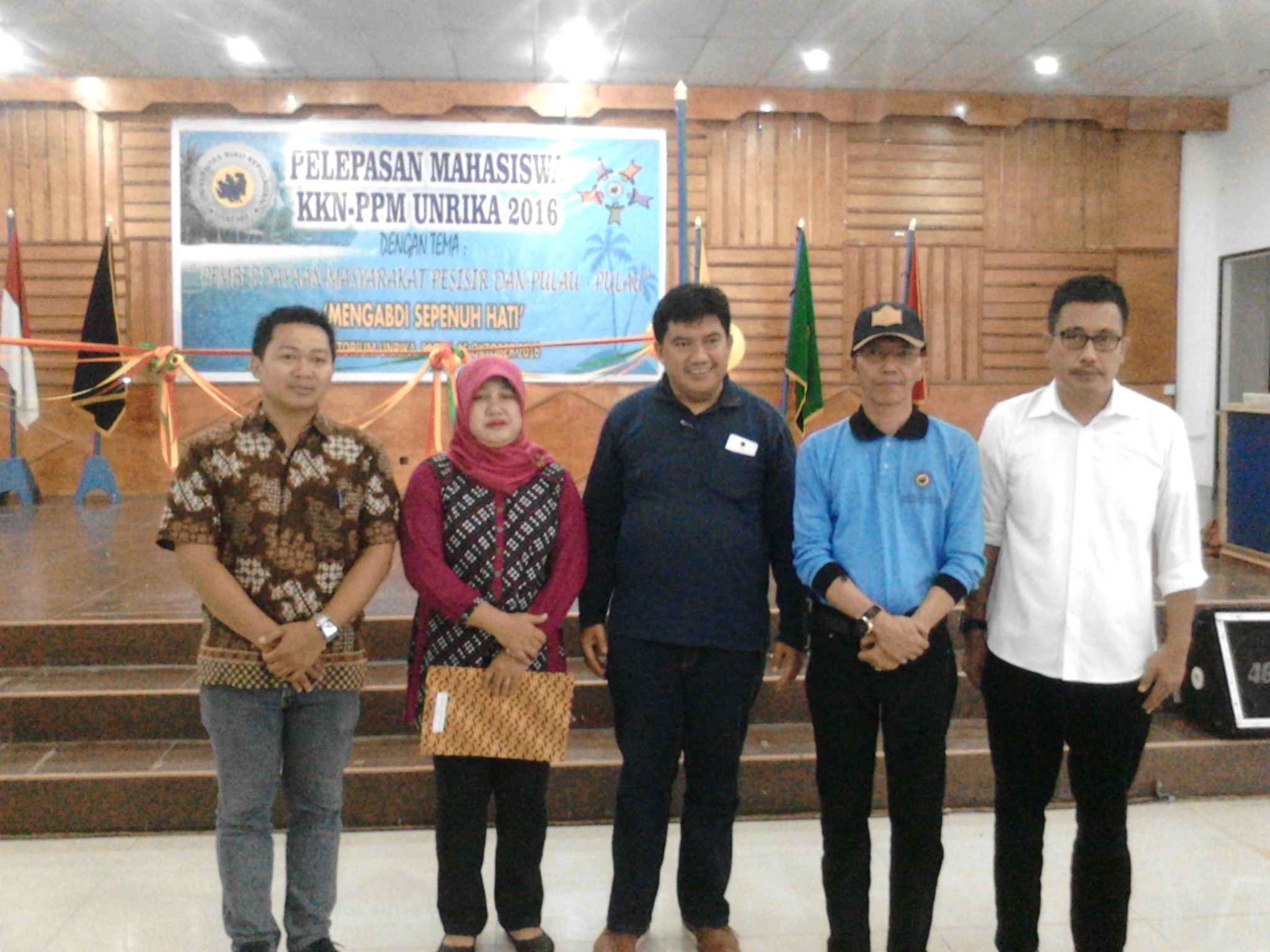

UNRIKA – Sabtu, 15 Oktober 2016. KKN-PPM merupakan program intrakulikuler atau bagian integral dari kurikulum pendidikan tinggi, khususnya jenjang program S1 yang berhubungan erat dengan pembinaan mahasiswa secara utuh. Program KKN-PPM Universitas Riau Kepulauan merupakan wajib yang ditempuh oleh mahasiswa pada setiap program studi jenjang S1. Program KKN-PPM menjadi bagian dari kurikulum setiap fakultas dan wajib diikuti oleh mahasiswa yang telah memenuhi persyaratan yang ditetapkan. Mahasiswa yang belum mengikuti program KKN belum dapat dinyatakan lulus dari Universitas Riau Kepulauan.
Wakil Wali Kota Batam Amsakar Achmad, S.Sos, M.Si menghadiri acara pelepasan ini. Dalam sambutannya agar KKNl dilakukan dengan total, diharapkan mahasiswa mengabdi sepenuh hati. Amsakar meminta para mahasiswa yang melakukan Kuliah Kerja Nyata-Pembelajaran Pemberdayaan Masyarakat ( KKN-PPM) hendaknya ada nilai tambah bagi warga masyarakat tempat kegiatan KKN-PPM tersebut.
“Jadi KKN-PPM itu harus ada makna,” ujar Amsakar Achmad di hadapan 553 mahasiswa Universitas Riau Kepulauan Batam yang akan melakukan kegiatan KKN-PPM, Sabtu (15/10/2016). KKN-PPM ini dilakukan di berbagai pulau yang masuk wilayah kerja Batam seperti Pulau Galang, Pulau Setokok, Tanjung Riau dan lain-lain.Amsakar menasihati para mahasiswa agar dalam bekerja itu serius, total, dan tidak hanya sekadar untuk jalan.”Jalankan misi Tri Dharma Perguruan Tinggi itu,” kata mantan Dekan FISIPOL Unrika itu memberikan nasehat. Ia juga mengajak mahasiswa agar dalam kegiatan KKN-PPM jangan setengah-setengah. “Harus kerja total, republik ini membutuhkan orang bekerja total,” paparnya.

Dengan tema pelepasan KKN-PPM ini “PEMBERDAYAAN MASYARAKAT PESISIR DAN PULAU-PULAU” dalam paparannya Ade P Nasution, SE.,M.Si selaku Wakil Rektor I Universitas Riau Kepulauan, mendukung penuh kegiatan KKN-PPM ini dengan kegiatan utama “LAUT BUKAN TONG SAMPAH” sebanyak 553 mahasiswa berasal dari 4 fakultas (FKIP, Fakultas Hukum, FISIPOL, Fakultas Ekonomi) menjadi 23 kelompok yang tersebar di-5 kecamatan daerah Batam. Ade Parlaungan Nasution mengingatkan, dosen pembimbing harus serius membimbing mahasiswa dalam kegiatan KKN-PPN. “Jika ada dosen pembimbing lapangan (DPL) yang nggak aktif, segera laporkan!” ujar Ade P. Nasution. Ade mengatakan, dalam hal penelitian, sudah ada aturannya yang wajib dilakukan oleh para dosen. Oleh sebab itu, penelitian harus ditingkatkan mengingat hal itu tidak hanya didasari oleh Tri Dharma Perguruan Tinggi, tapi merupakan bentuk tanggungjawab dosen sebagai pendidik.
Adapun kegiatan pendukung KKN-PPM UNRIKA 2016 disesuaikan dengan potensi dan situasi pada masing-masing lokasi, antara lain dibidang Pendidikan , Pemerintahan , Hukum , Ekonomi Kerakyatan , dan Teknologi Tepat Guna.
Ketua Lembaga Penelitian dan Pengabdian Masyarakat (LPPM) Unrika, Ramses, S.Pi.,M.Si, mengatakan, jumlah mahasiswa yang mengikuti kegiatan KKN-PPM tahun ini sebanyak 553 mahasiswa dari 14 program studi, dengan Dosen Pembimbing Lapangan (DPL) masing-masing.
Dipilihnya pulau-pulau dalam kegiatan KKN-PPM ini agar mahasiswa mengetahui bahwa masyarakat Batam tidak hanya di kota-kota besar menyebar di tiga ratusan pulau. Selain itu agar pengabdian kepada masyarakat tepat sasaran.

| DAFTAR MAHASISWA PRODI S1 PENDIDIKAN BAHASA INGGRIS, ANGKATAN 2016 | ||||||
| No | NIM | Nama | Tempat Lahir | Kelamin | Tanggal Lahir | Prodi |
| 1 | 16060001 | ADI CANDRA | BATAM | L | 04/01/1995 | S1 PENDIDIKAN BAHASA INGGRIS |
| 2 | 16060002 | NANDA ANDRIANIE | SUKABUMI | P | 06/04/1997 | S1 PENDIDIKAN BAHASA INGGRIS |
| 3 | 16060003 | MASTA WENTI SIREGAR | JAKARTA | P | 19/08/1995 | S1 PENDIDIKAN BAHASA INGGRIS |
| 4 | 16060004 | MUHAMMAD KHUSAIRI NASUTION | MEDAN | L | 06/10/1996 | S1 PENDIDIKAN BAHASA INGGRIS |
| 5 | 16060005 | SALIMAH | PEMALANG | P | 12/10/1978 | S1 PENDIDIKAN BAHASA INGGRIS |
| 6 | 16060006 | MIRA SANTIKA | NAMU UKUR | P | 01/01/1998 | S1 PENDIDIKAN BAHASA INGGRIS |
| 7 | 16060007 | GRACIA PUGESEHANG | BATAM | P | 24/01/1998 | S1 PENDIDIKAN BAHASA INGGRIS |
| 8 | 16060008 | NURLIANTI PARDEDE | BATAM | P | 18/11/1997 | S1 PENDIDIKAN BAHASA INGGRIS |
| 9 | 16060009 | LINA | TABAN | P | 04/04/1997 | S1 PENDIDIKAN BAHASA INGGRIS |
| 10 | 16060010 | ANNISA WIDYA HUSNA ARYANI | BATAM | P | 17/09/1997 | S1 PENDIDIKAN BAHASA INGGRIS |
| 11 | 16060011 | DIAH ESTIANDARI | BATAM | P | 17/12/1996 | S1 PENDIDIKAN BAHASA INGGRIS |
| 12 | 16060012 | DWI YANTI SITOHANG | BATAM | P | 13/02/1999 | S1 PENDIDIKAN BAHASA INGGRIS |
| 13 | 16060013 | SAUSAN NUDHAR | BATAM | P | 02/02/1998 | S1 PENDIDIKAN BAHASA INGGRIS |
| 14 | 16060014 | MONIKA MORI SANDI SIMBOLON | SITINJO | P | 24/03/1994 | S1 PENDIDIKAN BAHASA INGGRIS |
| 15 | 16060015 | SARTIKA | BATAM | P | 20/11/1996 | S1 PENDIDIKAN BAHASA INGGRIS |
| 16 | 16060016 | KRISTINA TIAHAHU TAMBUNAN | SIDIKALANG | P | 28/04/1998 | S1 PENDIDIKAN BAHASA INGGRIS |
| 17 | 16060017 | ELSA MAHARANI | BATAM | P | 28/04/1998 | S1 PENDIDIKAN BAHASA INGGRIS |
| 18 | 16060018 | LEDYA MONALISA | BATAM | P | 27/06/1998 | S1 PENDIDIKAN BAHASA INGGRIS |
| 19 | 16060019 | FEBRIA SUNDUSI JASMINE | BATAM | L | 28/02/1997 | S1 PENDIDIKAN BAHASA INGGRIS |
| 20 | 16060020 | BERBIE SILVIA | BATAM | P | 21/02/1998 | S1 PENDIDIKAN BAHASA INGGRIS |
| 21 | 16060021 | RISKA AMALIA | BATAM | P | 22/06/1998 | S1 PENDIDIKAN BAHASA INGGRIS |
| 22 | 16060022 | DESTY MELINDA | BATAM | P | 24/12/1997 | S1 PENDIDIKAN BAHASA INGGRIS |
| 23 | 16060023 | ANGGUN EVI ANITSARI | PURBALINGGA | P | 27/07/1997 | S1 PENDIDIKAN BAHASA INGGRIS |
| 24 | 16060024 | MARIDA ANNUM HARAHAP | BALIMBING JAE | P | 07/11/1994 | S1 PENDIDIKAN BAHASA INGGRIS |
| 25 | 16060025 | PRASETYA KENCANA | BATAM | L | 27/10/1993 | S1 PENDIDIKAN BAHASA INGGRIS |
| 26 | 16060026 | FITRI SIDABUTAR | PEMATANG SIANTAR | P | 19/05/1995 | S1 PENDIDIKAN BAHASA INGGRIS |
| 27 | 16060027 | HERLY SHOFIANA | BATAM | P | 10/06/1998 | S1 PENDIDIKAN BAHASA INGGRIS |
| 28 | 16060028 | KRISTINA SILITONGA | BATAM | P | 16/05/1998 | S1 PENDIDIKAN BAHASA INGGRIS |
| 29 | 16060029 | ELSABASTIEN | BATAM | P | 03/05/1998 | S1 PENDIDIKAN BAHASA INGGRIS |
| 30 | 16060030 | ANNISA JUWITA SARI | MEDAN | P | 13/04/1997 | S1 PENDIDIKAN BAHASA INGGRIS |
| 31 | 16060031 | AGNAS FLAVIANA PAKPAHAN | BATAM | P | 05/10/1997 | S1 PENDIDIKAN BAHASA INGGRIS |
| 32 | 16060032 | AGUSTINA DERAN | BATAM | P | 14/08/1997 | S1 PENDIDIKAN BAHASA INGGRIS |
| 33 | 16060033 | DINI AZMILATUL FAHRIA | BATAM | P | 18/05/1998 | S1 PENDIDIKAN BAHASA INGGRIS |
| 34 | 16060034 | RINI TARIHORAN | BATAM | P | 21/08/1998 | S1 PENDIDIKAN BAHASA INGGRIS |
| 35 | 16060035 | RIKA HERLIANA LUMBAN GAOL | BATAM | P | 15/03/1998 | S1 PENDIDIKAN BAHASA INGGRIS |
| 36 | 16060036 | BONITA TAMBUNAN | TIMIKA | P | 19/10/1996 | S1 PENDIDIKAN BAHASA INGGRIS |
| 37 | 16060037 | FEBRI CRIS MONICA SIMANUNGKALI | SIPOHOLON | P | 17/02/1999 | S1 PENDIDIKAN BAHASA INGGRIS |
| 38 | 16060038 | ZUL ZAHRI | TANJUNG UBAN | L | 26/05/1998 | S1 PENDIDIKAN BAHASA INGGRIS |
| 39 | 16060039 | HIDAYATUL FAJRI | TANJUNG BARULAK | L | 17/04/1998 | S1 PENDIDIKAN BAHASA INGGRIS |
| 40 | 16060040 | ADE YOPITA HARAHAP | MEDAN | P | 23/09/1998 | S1 PENDIDIKAN BAHASA INGGRIS |
| 41 | 16060041 | MUHAMMAD NURSALMAN | UJUNG PANDANG | L | 25/02/1995 | S1 PENDIDIKAN BAHASA INGGRIS |
| 42 | 16060042 | YULIA ULTRI DIANA EFFENDI | BATAM | P | 16/08/1997 | S1 PENDIDIKAN BAHASA INGGRIS |
| 43 | 16060043 | TITIS KARINIA SESAR AYU | BLITAR | P | 21/07/1998 | S1 PENDIDIKAN BAHASA INGGRIS |
| 44 | 16060044 | SISKA MONIKA SIAHAAN | PEMATANG SIANTAR | P | 14/03/1996 | S1 PENDIDIKAN BAHASA INGGRIS |
| 45 | 16060045 | FEBI FATIMAH | BATAM | P | 11/12/1997 | S1 PENDIDIKAN BAHASA INGGRIS |
| 46 | 16060046 | SYAFIQAH | BELAKANG PADANG | P | 12/08/1997 | S1 PENDIDIKAN BAHASA INGGRIS |
| 47 | 16060047 | JEFRIADI | BATAM | L | 13/05/1993 | S1 PENDIDIKAN BAHASA INGGRIS |
| 48 | 16060048 | DEDYY LATURE | HILINAME | L | 03/03/1996 | S1 PENDIDIKAN BAHASA INGGRIS |
| 49 | 16060049 | ANGELINE ONISYE SIMBOLON | BATAM | P | 25/06/1997 | S1 PENDIDIKAN BAHASA INGGRIS |
| 50 | 16060050 | RASMI DAHMANITA | TANJUNG BATU | P | 05/03/1997 | S1 PENDIDIKAN BAHASA INGGRIS |
| 51 | 16060051 | LISMA YANTI GULTOM | MEDAN | P | 10/02/1996 | S1 PENDIDIKAN BAHASA INGGRIS |
| 52 | 16060052 | PUTRI SAVITTA DEWI | PADANG | P | 23/03/1996 | S1 PENDIDIKAN BAHASA INGGRIS |
| 53 | 16060053 | FIRMAN SYAH EFFENDI | TANJUNG UBAN | L | 08/06/1994 | S1 PENDIDIKAN BAHASA INGGRIS |
| 54 | 16060054 | SURIKA JULYEINDA | TANJUNG UBAN | P | 12/07/1990 | S1 PENDIDIKAN BAHASA INGGRIS |
| 55 | 16060055 | SUGIMIN | SUBANG MAS | L | 19/04/1997 | S1 PENDIDIKAN BAHASA INGGRIS |
| 56 | 16060056 | LIGA SANDI SIREGAR | SIPAGIMBAR | L | 25/07/1996 | S1 PENDIDIKAN BAHASA INGGRIS |
| 57 | 16060057 | BERSARIATI SIAHAAN | MEDAN | P | 08/05/1992 | S1 PENDIDIKAN BAHASA INGGRIS |
| 58 | 16060058 | MELLA ANANDA | PEKAN SABTU | P | 04/01/1997 | S1 PENDIDIKAN BAHASA INGGRIS |
| 59 | 16060059 | HAZLINDA FRISCA | TANJUNG BATU | P | 21/05/1998 | S1 PENDIDIKAN BAHASA INGGRIS |
| 60 | 16060060 | YADI FIRMANSYAH | BATAM | L | 24/03/1995 | S1 PENDIDIKAN BAHASA INGGRIS |
| 61 | 16060061 | DEDY BAYU PRAYOGO | SRAGEN | L | 13/10/1995 | S1 PENDIDIKAN BAHASA INGGRIS |
| 62 | 16060062 | EKA PRATIWI SIMARMATA | BATAM | P | 27/07/1998 | S1 PENDIDIKAN BAHASA INGGRIS |
| 63 | 16060063 | EGA YOLANDA | BATAM | P | 24/10/1994 | S1 PENDIDIKAN BAHASA INGGRIS |
| 64 | 16060064 | SALNA ANISA PUTRI | RUKAM | P | 15/11/1997 | S1 PENDIDIKAN BAHASA INGGRIS |
| 65 | 16060065 | ADE MULIAWAN | TANJUNG AUR | L | 01/09/1995 | S1 PENDIDIKAN BAHASA INGGRIS |
| 66 | 16060066 | YASHICA TRIANINGRUM | BATAM | P | 13/06/1997 | S1 PENDIDIKAN BAHASA INGGRIS |
| DAFTAR MAHASISWA PRODI S1 PENDIDIKAN BIOLOGI, ANGKATAN 2016 | ||||||
| No | NIM | Nama | Tempat Lahir | Kelamin | Tanggal Lahir | Prodi |
| 1 | 16040001 | JUWITA SALWA | BATAM | P | 27/04/1997 | S1 PENDIDIKAN BIOLOGI |
| 2 | 16040002 | MARTHA FRIENDLY SRI LESTARI BA | TARUTUNG | P | 30/01/1996 | S1 PENDIDIKAN BIOLOGI |
| 3 | 16040003 | HASYIR | PAJAR BULAN | L | 03/02/1992 | S1 PENDIDIKAN BIOLOGI |
| 4 | 16040004 | GUSVA O VANI | PADANG SIRIH | P | 28/08/1994 | S1 PENDIDIKAN BIOLOGI |
| 5 | 16040005 | NURHALIMAH NASUTION | SUKADAME | P | 16/12/1997 | S1 PENDIDIKAN BIOLOGI |
| 6 | 16040006 | SITI HAYYU NUR WASI | BATAM | P | 29/07/1998 | S1 PENDIDIKAN BIOLOGI |
| 7 | 16040007 | PROTUS DIDI MUSYERIYANTO BELLE | BATAM | L | 19/07/1997 | S1 PENDIDIKAN BIOLOGI |
| 8 | 16040008 | VIONA DELIA CLARISA | SUNGAI GUNTUNG | P | 20/05/1998 | S1 PENDIDIKAN BIOLOGI |
| 9 | 16040009 | TITIK PERMATA SARI | KOTO RAWANG | P | 10/10/1997 | S1 PENDIDIKAN BIOLOGI |
| 10 | 16040010 | DIAN NATALIA CHISTINA S | BATAM | P | 23/12/1996 | S1 PENDIDIKAN BIOLOGI |
| 11 | 16040011 | YENI WAHYUNI HASIBUAN | BATAM | P | 18/04/1998 | S1 PENDIDIKAN BIOLOGI |
| 12 | 16040012 | SITI MAISYARAH ULFA | BATAM | P | 12/12/1997 | S1 PENDIDIKAN BIOLOGI |
| 13 | 16040013 | NURHABIBAH | TEMIANG | P | 31/12/1998 | S1 PENDIDIKAN BIOLOGI |
| 14 | 16040014 | RATNA KRISNAYATI | TITI AKAR | P | 11/12/1998 | S1 PENDIDIKAN BIOLOGI |
| 15 | 16040015 | EVA ROMINDAR | BATAM | P | 08/10/1996 | S1 PENDIDIKAN BIOLOGI |
| 16 | 16040016 | MUHAMMAD FADLI | PULAU SARANG | L | 16/01/1989 | S1 PENDIDIKAN BIOLOGI |
| 17 | 16040017 | LASDEN SARAGIH | NEGERI TANI | L | 01/02/1994 | S1 PENDIDIKAN BIOLOGI |
| 18 | 16040018 | ANTONIUS M NERUK DANGA | HOKENG | L | 31/10/1996 | S1 PENDIDIKAN BIOLOGI |
| 19 | 16041019 | TRI YUNI EVITANALTI | PEKANBARU | P | 17/05/1996 | S1 PENDIDIKAN BIOLOGI |
| BATAM, 12 OKTOBER 2016 | ||||||
| DAFTAR MAHASISWA PRODI S1 PENDIDIKAN MATEMATIKA, ANGKATAN 2016 | ||||||
| No | NIM | Nama | Tempat Lahir | Kelamin | Tanggal Lahir | Prodi |
| 1 | 16050001 | ZAKIATUL FAHIROH | BATAM | P | 13/03/1999 | S1 PENDIDIKAN MATEMATIKA |
| 2 | 16050002 | YUDA RIAN TONA PUTRA | BATAM | L | 21/12/1996 | S1 PENDIDIKAN MATEMATIKA |
| 3 | 16050003 | ROMIKA DIAN | SOSA | P | 15/08/1994 | S1 PENDIDIKAN MATEMATIKA |
| 4 | 16050004 | JENNY DERFIA SIBARANI | PEKANBARU | P | 16/01/1997 | S1 PENDIDIKAN MATEMATIKA |
| 5 | 16050005 | HERU DARMAWAN | PANGKAL PINANG | L | 16/09/1998 | S1 PENDIDIKAN MATEMATIKA |
| 6 | 16050006 | NURSELLI AYUNDA SAPUTRI | TANJUNG PINANG | P | 21/02/1999 | S1 PENDIDIKAN MATEMATIKA |
| 7 | 16050007 | NURUL ZAKIYAH | TANJUNG PULAU TINGGI | P | 28/08/1997 | S1 PENDIDIKAN MATEMATIKA |
| 8 | 16050008 | TIARA JASTIN SIKUMBANG | BATAM | P | 10/11/1995 | S1 PENDIDIKAN MATEMATIKA |
| 9 | 16050009 | PITRI SUPIATI | KETAM PUTIH | L | 16/02/1998 | S1 PENDIDIKAN MATEMATIKA |
| 10 | 16050010 | ARDI GUSTIADI | BATAM | L | 12/08/1998 | S1 PENDIDIKAN MATEMATIKA |
| 11 | 16050011 | DEVITA AGNESTI YOLANDA PUTRI | TG.PINANG | P | 11/09/1998 | S1 PENDIDIKAN MATEMATIKA |
| 12 | 16050012 | MARLINA DESTANA | BELAKANG PADANG | P | 07/12/1998 | S1 PENDIDIKAN MATEMATIKA |
| 13 | 16050013 | DEVY HARYANTI | KIJANG | P | 16/06/1998 | S1 PENDIDIKAN MATEMATIKA |
| 14 | 16050014 | SUPRIYANTO HUTAPEA | BATAM | L | 31/08/1996 | S1 PENDIDIKAN MATEMATIKA |
| 15 | 16050015 | NISPUTRI | BATU SANGKAR | P | 14/12/1997 | S1 PENDIDIKAN MATEMATIKA |
| 16 | 16050016 | MUHAMMAD MULYADI | PULAU KASU | L | 14/04/1999 | S1 PENDIDIKAN MATEMATIKA |
| 17 | 16050017 | MARIO | RAMPANG CATE | L | 03/12/1999 | S1 PENDIDIKAN MATEMATIKA |
| 18 | 16050018 | NUR ROHAINIE | JOHOR BAHRU | P | 14/08/1997 | S1 PENDIDIKAN MATEMATIKA |
| 19 | 16050019 | RISMA CAHYA PUTRI | TANJUNG PINANG | P | 11/03/1998 | S1 PENDIDIKAN MATEMATIKA |
| 20 | 16050020 | SELVINIA PUTRI | SEI LIMAU | P | 22/01/1997 | S1 PENDIDIKAN MATEMATIKA |
| 21 | 16050021 | SHELLI OKTAVIA | BATAM | P | 23/10/1997 | S1 PENDIDIKAN MATEMATIKA |
| 22 | 16050022 | IDA MURWATI | KEBUMEN | P | 11/12/1994 | S1 PENDIDIKAN MATEMATIKA |
| 23 | 16050023 | SHIRATHI FATHUR RAHIMAH | BELAWAN | P | 29/01/1999 | S1 PENDIDIKAN MATEMATIKA |
| 24 | 16050024 | SEPTIA EVA NATASYA | KENDAL | P | 16/09/1998 | S1 PENDIDIKAN MATEMATIKA |
| 25 | 16050025 | RIKA ARYANI | DUMAI | P | 04/02/1998 | S1 PENDIDIKAN MATEMATIKA |
| 26 | 16050027 | VIVI DELVIA | BATAM | P | 21/12/1996 | S1 PENDIDIKAN MATEMATIKA |
| 27 | 16050028 | BINSAR CHRISTOPER | JAKARTA | L | 22/04/1997 | S1 PENDIDIKAN MATEMATIKA |
| 28 | 16050029 | DARWIN HAMONANGAN LUMBAN RAJA | BATAM | L | 18/12/1996 | S1 PENDIDIKAN MATEMATIKA |
| 29 | 16050031 | ELISABETH OKTAVIANA SIRAIT | BATAM | P | 26/10/1994 | S1 PENDIDIKAN MATEMATIKA |
| 30 | 16050032 | DANIEL DIKMAN SIMANGUNSONG | BATAM | L | 14/11/1996 | S1 PENDIDIKAN MATEMATIKA |
| 31 | 16050033 | AKHIR MAYANG | PALEMBANG | P | 29/05/1996 | S1 PENDIDIKAN MATEMATIKA |
| 32 | 16050034 | SITI BAROKAH | BANYUASIN | P | 23/11/1993 | S1 PENDIDIKAN MATEMATIKA |
| 33 | 16050035 | DEVI PURNAMAWATI | PL. JAGA | P | 10/07/1997 | S1 PENDIDIKAN MATEMATIKA |
| 34 | 16050036 | MUHAMAD SIGIT ARIF DJABIR | ENDE | L | 21/09/1996 | S1 PENDIDIKAN MATEMATIKA |
| 35 | 16050037 | VEFI RUSDAYANI | BATAM | P | 02/02/1997 | S1 PENDIDIKAN MATEMATIKA |
| 36 | 16050038 | HARDIANSYAH ASHAR | LADAN | L | 12/12/1997 | S1 PENDIDIKAN MATEMATIKA |
| 37 | 16050039 | NOOR LAYLA | TANJUNGPINANG | P | 31/08/1997 | S1 PENDIDIKAN MATEMATIKA |
| 38 | 16050040 | AYU WULANDARI | MIDAI | P | 16/02/1997 | S1 PENDIDIKAN MATEMATIKA |
| 39 | 16050041 | DWI PUTRI WICAKSONO | BATAM | P | 29/03/1998 | S1 PENDIDIKAN MATEMATIKA |
| 40 | 16050042 | PIRMANSYAH | LADAN | L | 10/11/1998 | S1 PENDIDIKAN MATEMATIKA |
| 41 | 16053026 | PAUZI | BUKIT KACIK | L | 05/07/1991 | S1 PENDIDIKAN MATEMATIKA |
| 42 | 16053030 | RINA HETTI SITORUS | SIMPANG TIGA | P | 04/06/1983 | S1 PENDIDIKAN MATEMATIKA |
| DAFTAR MAHASISWA PRODI S1 PENDIDIKAN SEJARAH, ANGKATAN 2016 | ||||||
| No | NIM | Nama | Tempat Lahir | Kelamin | Tanggal Lahir | Prodi |
| 1 | 16120001 | GHASELLA NOVA RHAFIKAWATI | BATAM | P | 11/11/1997 | S1 PENDIDIKAN SEJARAH |
| 2 | 16120002 | SINAR | PULAU PANJANG | P | 07/11/1995 | S1 PENDIDIKAN SEJARAH |
| 3 | 16120003 | BAHARI AHMAD | KALABAHI | L | 12/06/1995 | S1 PENDIDIKAN SEJARAH |
| 4 | 16120004 | EUGENIUS LATO | PUUWALA | L | 08/07/1991 | S1 PENDIDIKAN SEJARAH |
| 5 | 16120005 | NOVITASARI | KELOMBOK | P | 01/10/1998 | S1 PENDIDIKAN SEJARAH |
| 6 | 16120006 | TONI | MORO | L | 09/10/1989 | S1 PENDIDIKAN SEJARAH |
| 7 | 16120007 | NINDRI EKA YULIANI | TANJUNGPINANG | P | 21/07/1998 | S1 PENDIDIKAN SEJARAH |
| 8 | 16120008 | NENTY ULFIANI | PURBALINGGA | P | 01/05/2016 | S1 PENDIDIKAN SEJARAH |
| 9 | 16120009 | LILIS SURYANI | TEREMPA | P | 06/01/1989 | S1 PENDIDIKAN SEJARAH |
| 10 | 16120010 | MUHAMAD ARFANDI | DAPUR 6 | L | 11/09/1998 | S1 PENDIDIKAN SEJARAH |
| 11 | 16120011 | AMARDI | KUALA BULUH | L | 22/12/1996 | S1 PENDIDIKAN SEJARAH |
| 12 | 16120012 | MUHAMMAD AGUNG ARIYUDHA | TANJUNG BALAI KARIMU | L | 12/07/1997 | S1 PENDIDIKAN SEJARAH |
| 13 | 16120013 | TRI WAHYANI | BATAM | P | 02/08/1998 | S1 PENDIDIKAN SEJARAH |
| 14 | 16120014 | AZWANDI | AIR BINI | L | 10/03/1997 | S1 PENDIDIKAN SEJARAH |
| 15 | 16120015 | APRINA DEWI SARTIKA SITUMORANG | SIDIANGKAT | P | 26/04/1996 | S1 PENDIDIKAN SEJARAH |
| 16 | 16120016 | BAGUS WICAKSONO | BATAM | L | 07/02/1998 | S1 PENDIDIKAN SEJARAH |
| 17 | 16120017 | INTAN CAHAYA TOGATOROP | KP. HARAPAN TG. BALA | P | 05/09/1998 | S1 PENDIDIKAN SEJARAH |
| 18 | 16120018 | IRMA LISDAYANA | PULAU TERONG | P | 28/08/1998 | S1 PENDIDIKAN SEJARAH |
| 19 | 16120019 | RISKA RAMADANI | PULAU CAWAN | P | 04/02/1996 | S1 PENDIDIKAN SEJARAH |
| 20 | 16120020 | ANGGUN PURNAMASARI | TANJUNGPINANG | P | 02/07/1998 | S1 PENDIDIKAN SEJARAH |
| 21 | 16120021 | INTAN FAUZIAH | PEKANBARU | P | 10/10/1996 | S1 PENDIDIKAN SEJARAH |
| 22 | 16120022 | NATALIA SEJA | FLORES | P | 17/10/1992 | S1 PENDIDIKAN SEJARAH |
| 23 | 16120023 | MUHAMMAD ARIF SALAFFUDIN | TG.PINANG | L | 23/09/1994 | S1 PENDIDIKAN SEJARAH |
| 24 | 16120024 | FEBRIADI | MUNJAN | L | 22/02/1998 | S1 PENDIDIKAN SEJARAH |
| 25 | 16120025 | MUSKARNO | KUDUS | L | 09/09/1985 | S1 PENDIDIKAN SEJARAH |
| 26 | 16122026 | PRIMA AGUNG GRESANTHO | BATAM | L | 23/11/1991 | S1 PENDIDIKAN SEJARAH |
| 27 | 16122027 | MUHAMMAD YUSRAN | SUMATERA SELATAN | L | 25/09/1972 | S1 PENDIDIKAN SEJARAH |
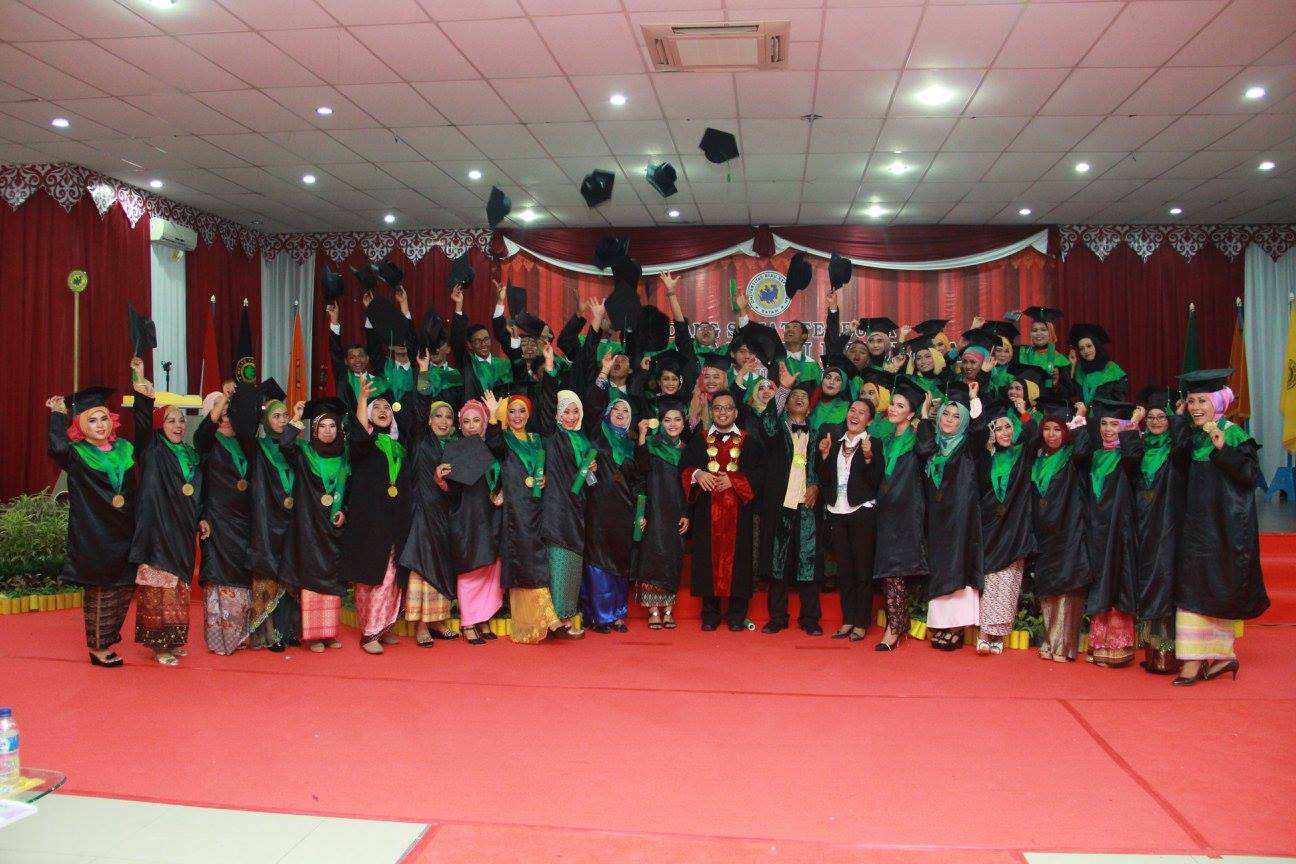
BATAM (HK)-Universitas Riau Kepulauan (Unrika) Batam hari ini, Selasa (11/10) mewisuda 284 mahasiswa dengan gelar Sarjana Pendidikan (S.Pd). Para wisudawan dan wisudawati ini, berasal dari Fakultas Keguruan dan Ilmu Pendidikan (FKIP) yang merupakan satu-satunya fakultas di perguruan tinggi (PT) dio Kota Batam.
Unrika Batam semakin memposisikan diri menjadikan sebuah PT berkualitas di tingkat nasional, khususnya di Provinsi Kepri. Hal ini terbukti satu persatu program studi (prodi) di masing-masing fakultasnya mulai terakreditasi B Baik sekali. Hal ini berdasarkan hasil keputusan dari Badan Akreditasi Nasional Perguruan Tinggi untuk 4 Program Studi Akreditasi B yaitu Pendidikan Bahasa Inggris (S-1) berdasarkan SK No. 0163/SK/BAN-PT/Akred/S/IV/2016 tahun 2016-2021.
Selain itu untuk Penndidikan Biologi (S-1) dengan SK No. 1122/SK/BAN-PT/Akred/S/X/2015 tahun 2015-2020, dan Pendidikan Matematika (S1) dengan SK No. 972/SK/BAN-PT/Akred/S/IX/2015 tahun 2015-2020. Sedangkan Pendidikan Sejarah (S1) dengan SK No. 972/SK/BAN-PT/Akred/S/IX/2015 tahun 2015-2020. Sementara Bimbingan Konseling dengan Akreditasi C dengan SK No. 118/ SK/BAN-PT/Akred/S/III/2015 tahun 2015-2020.
Unrika Batam dari waktu ke waktu terus melakukan peningkatan pelayanan disegala sector baik itu dari sarana prasarana pembelajaran, pelayanan mahasiswa dan dosen, kualitas dan pendidikan dosen, penelitian, pengabdian masyarakat dan kerjasama, dan lain sebagainya.
Dekan FKIP Unrika Batam, Dahrul Aman Harahap, dalam rilisnya disampaikan kepada Haluan Kepri, Senin (10/10), berpesan kepada para mahasiswa yang di wisuda, khususnya untuk Fakultas FKIP untuk dapat berkontribusi secara nyata di masyarakat. Terutama di daerah-daerah perbatasan dan terpencil yang masih membutuhkan guru-guru yang berkualitas agar pendidikan dapat meningkat secara merata di Provinsi Kepri. (men)
Sumber : http://haluankepri.com/pendidikan/95829-hari-ini-unrika-wisuda-284-mahasiswa.html
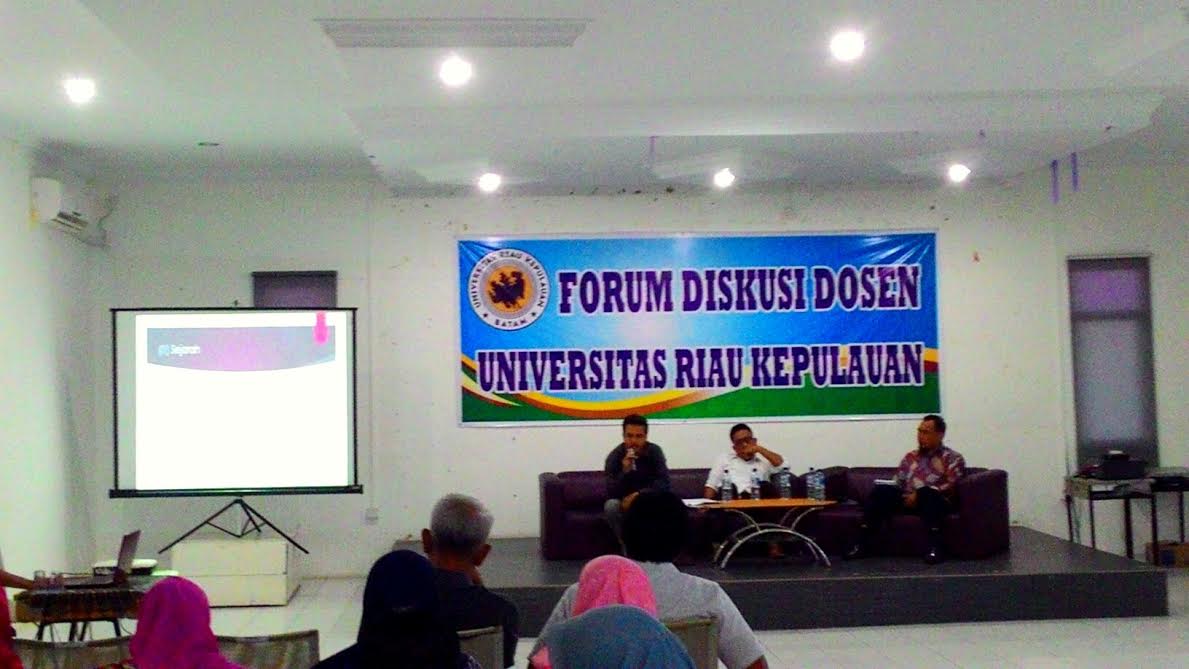

Kamis, 29 September 2016, setelah vakum selama 1 tahun, Forum Diskusi Bulanan Dosen Universitas Riau Kepulauan Batam kembali digelar di aula mini UNRIKA Batam, Batuaji. Pada sesi bulan september 2016 ini dibuka dengan narasumber Ade P. Nasution (Dosen Tetap Fak Ekonomi) dan Muhammad Solihin (Dosen Tetap FISIPOL) dengan tema diskusi “Ekonomi Kultural sebagai Alternatif sistem Ekonomi Neoklasik” yang di Pandu oleh moderator Cahyo Budi Santoso (Dosen Tetap Prodi Akuntansi).
Acara Forum Diskusi ini dibuka oleh Rektor Universitas Riau Kepulauan Batam, Prof. Dr. Nasruddin Harahap,SU, dalam sambutannya, rektor menyambut baik dan mendorong agar forum-forum ilmiah dikembangkan dan di buat kebiasaan yang bagus di lingkungan kampus UNRIKA. lebih lanjut lagi Prof . Dr. Nasruddin Harahap menyampaikan agar semua dosen harus mampu berfikir ilmiah dan menyampaikan ide-ide kreatif untuk pembangunan bangsa.
Kegiatan diskusi bulanan dosen UNRIKA di hadiri oleh sekitar 160 dosen tetap yang ada dilingkungan UNiversitas Riau kepulauan Batam.
Dalam paparannya, Narasumber Ade P. Nasution, menyebutkan bahwa sistem Ekonomi yang ada sekarang belum tentu cocok dengan setiap negara, karena ada beberapa yang merugikan, dan Ade Mengusulkan agar adanya kombinasi masukan dari kultural atau kebudayaan suatu bangsa, Ade mencontohkan keberhasilan Jepang dan Korea yang saat ini memimpin ekonomi dunia, yang memasukkan unsur kebudayaannya dalam kegiatan ekonomi negaranya.
Narasumber lainnya, Muhammad Solihin menyebutkan bahwa perlu rekayasa sosial di bidang ekonomi Indonesia yang selama ini terlena dalam pelukan mesra neoliberalisme, Solihin menyebutkan bahwa modal bangsa indonesia cukup besar untuk bersaing di dunia internasional meski tanpa meninggalkan akar budayanya dalam pembangunan.
acara yang berlangsung selama 2 jam lebih ini akhirnya ditutup oleh Koordinator Forum Diskusi Dosen UNRIKA Batam, Yustinus Farid Setyobudi dengan membacakan resum hasil diskusi dan menentukan tema diskusi bulan Novermber 2016 yaitu tentang Tax Amanesty.
You must be logged in to post a comment.